
How do you measure a year of art?
Reflecting on a new year of art consumption

Paris doesn’t let you sit still, even if you try. Just the other day, I received a flyer from the mayor’s office about a new “street art hike” in my neighborhood. I’ll admit, at first, I rolled my eyes – of course the right-wing asshole is marketing the illegal punk graffiti as a cultural event — but I went anyway. One hour of walking later, I found myself charmed by the hidden corners, and the architecture of a part of town I never bother to visit.
This is the energy I want to keep in 2026! Culture and creative hobbies are central to my life, and i have the privilege of living right next door to the best museums, theaters, libraries, and craft supplies shops in the world. But inertia is a hell of a drug: if i don’t make an effort (read: lots of efforts, every single tiny step of the very long way), i miss all the chances to discover art. Sure i could open Apple TV and catch up on Pluribus1, but then i’d have to actually pay attention and focus on all the plot and the details to make sense of it. It’s just so much easier to press play on the latest Godzilla instead so that i can scroll my instagram feed at the same time.
And all this is only about art as i can get it inside my home. If you add the hassle of reservations to museums, finding galleries, getting concert tickets… i just didn’t do any of that in 2025! It’s not a matter of money (I’m still considered impoverished youth by the social schemes), just a matter of effort and getting off my sofa for an experience that wasn’t guaranteed to be great. At least if the movie sucks i can just close the streaming window, and i didn’t even get dressed up in the first place!2
So comes the question: how on earth does one measure a year of art? How do you record, quantify, rate and summarize the most subjective of topics? And how do you get past consumption of art into appreciation of art?

Tracking for the sake of doing
First of all: why track and measure? Are we not in an era of forced productivity? Why would i want to add more stress and new grades to my life when i’ve just graduated college forever?
Well, the answer is simple: when it comes to hard things, if i don’t measure, i don’t do. Exercise happens because i get to fill my yearly habit tracker, and long books get read for the Goodreads pages challenge.
Metrics and goals are absolutely a ploy to make me the best version of myself: they keep me accountable on all the enjoyable things i want to do, but keep being distracted from by algorithms and targeted ads. I wish i were an autonomous independent adult being who can pursue her passions, but i have to confess: i am but a sheep, lead astray by multi-billion companies who want my money, my time, and all of my brain too, thank you very much.
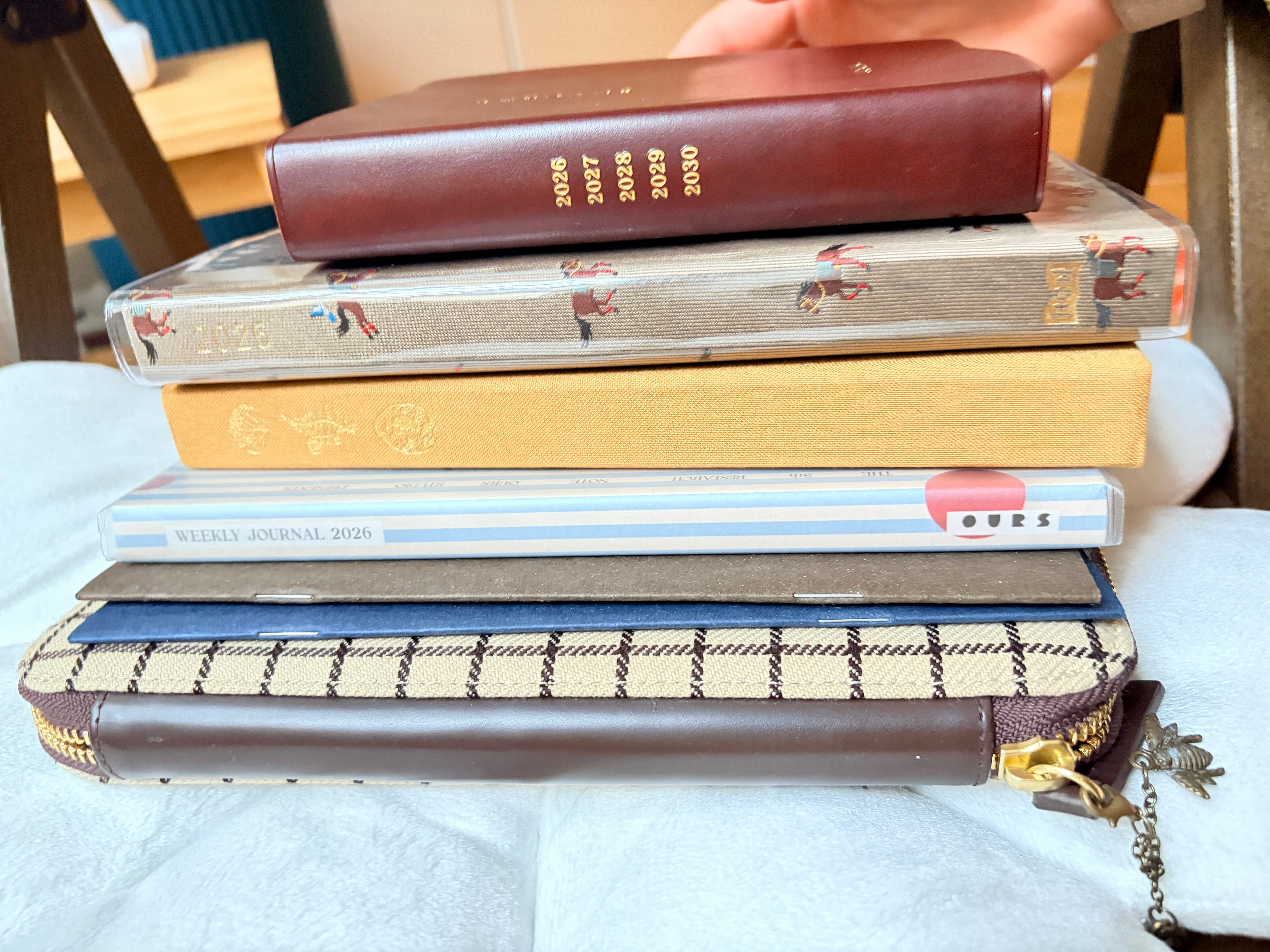
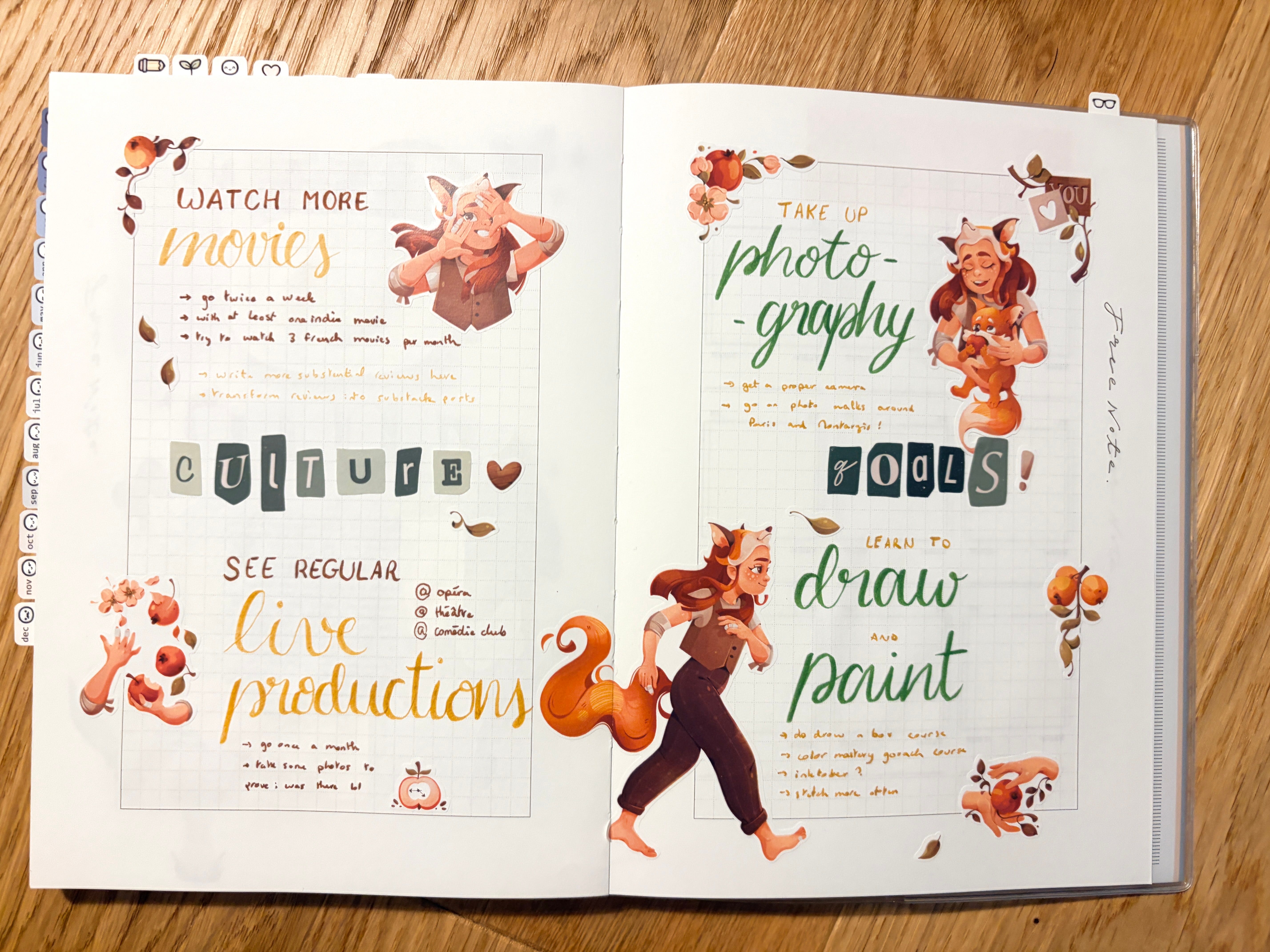
So, with all that said, the foundations are actually simple: i keep a journal. Or more precisely, several journals. I’ve been in my “analog era” since i got enough money for a Leuchtturm journal and I’m making lists every month of books i’ve read, movies i’ve watched, exhibitions i’ve seen, concerts i’ve heard, …
It’s a lot (at least for books and movies, we’ve already established i’m falling short on the other ones), but it happens to be a hobby of mine, more than just an accountability mechanism – little makes me happier than putting stickers down on the page! And little makes me more upset than a half-done spread! So dedicating a notebook to a topic is the perfect solution to make me engage with a topic: i will have to fill the pages, and it will spark great joy, gently pavolving myself into doing more.
Curated lists are a goldmine
Lists shield me from decision fatigue: for all the things i see, there’s at least a list of thing i want to see. This is mainly to combat the choice paralysis i get from opening a streaming app or a theater’s program. I no longer blindly go into the fray and pick whatever strikes my fancy, because i have terrible, terrible, terrible taste and always go for the most clickbaity option (and regret it after). The act of making the list, ie reflecting on what’s available, why it’s interesting potentially, why i want to see it, is equally as important as going to see the thing.
But how do you curate things that you will enjoy? I firmly believe that’s a question between you and your high-brow snotty reviewer, but i’ll tell you my process.
For movies, plays and concerts involves opening Telerama, a French culture review magazine, and filtering their reviews for the 3/4 and 4/4 grades. I then write down the names of movies and tv shows that resonate, and try to get tickets for the plays and concerts immediately. If i put this task off, i know i’ll never go back to it, and then it’ll be sold out. I’ve also gotten myself a cinema “pass” that gives me unlimited movies, and i guilt-trip myself into going twice a week so i get my money’s worth.
For books, i have an excessive backlog of interesting scifi and fantasy already, that i supplement with my family’s recs and the winners of a few French literature prizes. Not all those picks fall into the art category, but they tend to at least have some brains behind them so they’re not too bad either. I’ve also gotten myself a brand new New Yorker subscription to widen my horizons (will see if that plays out or not!).
If you want to start something similar, i’d recommend getting well-paying job so you can afford it (lol), or finding a youth potion so you can get the student discount. If all fails, it’s trial and error until you discover the journalists you a) agree with and b) enjoy reading (because some of them have awful prose and will put me off a great show even when they rave about it!).

Hone the axe and define your taste
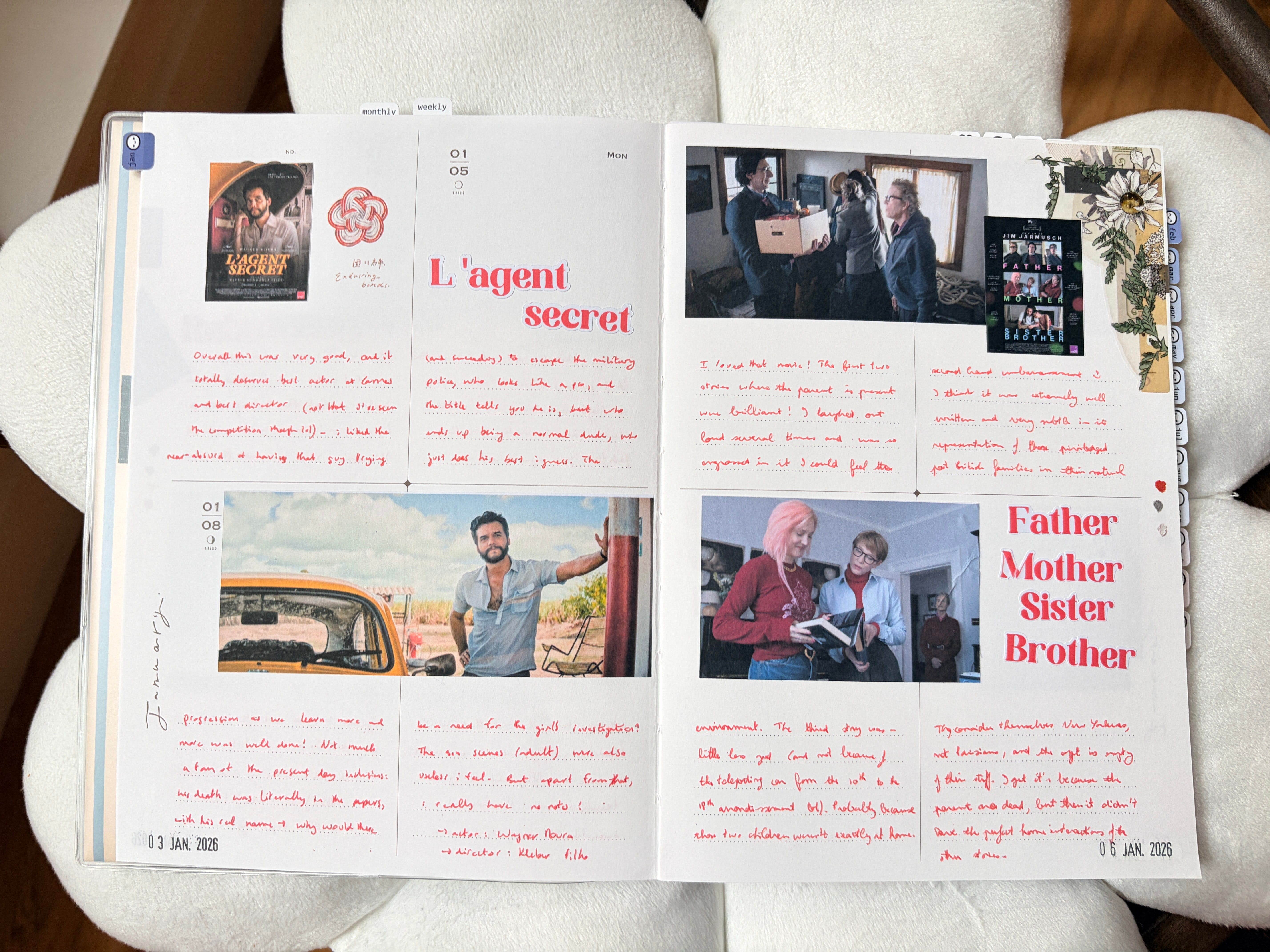
The notebooks aren’t only for tracking, they also serve as a way to force myself to reflect on what i consume. For each, i print out a pretty picture (to entice myself to make the page) and then write down some thoughts. I’m not allowed to copy wikipedia (which is a pain to do by hand!), and since i’m embellishing the book as a keepsake, i must write down something decent or else i forward-cringe of re-reading the page in a few years.
You all know the studies: if you write it by hand, your brain remembers it better – and if you make it specific, it’ll stick! Now that i’m processing the books in my own words, i find that i can better resurface why and how it touched me. I always set up a review page in advance and then pray to my perfectionist fears to push myself to write down several sentences.
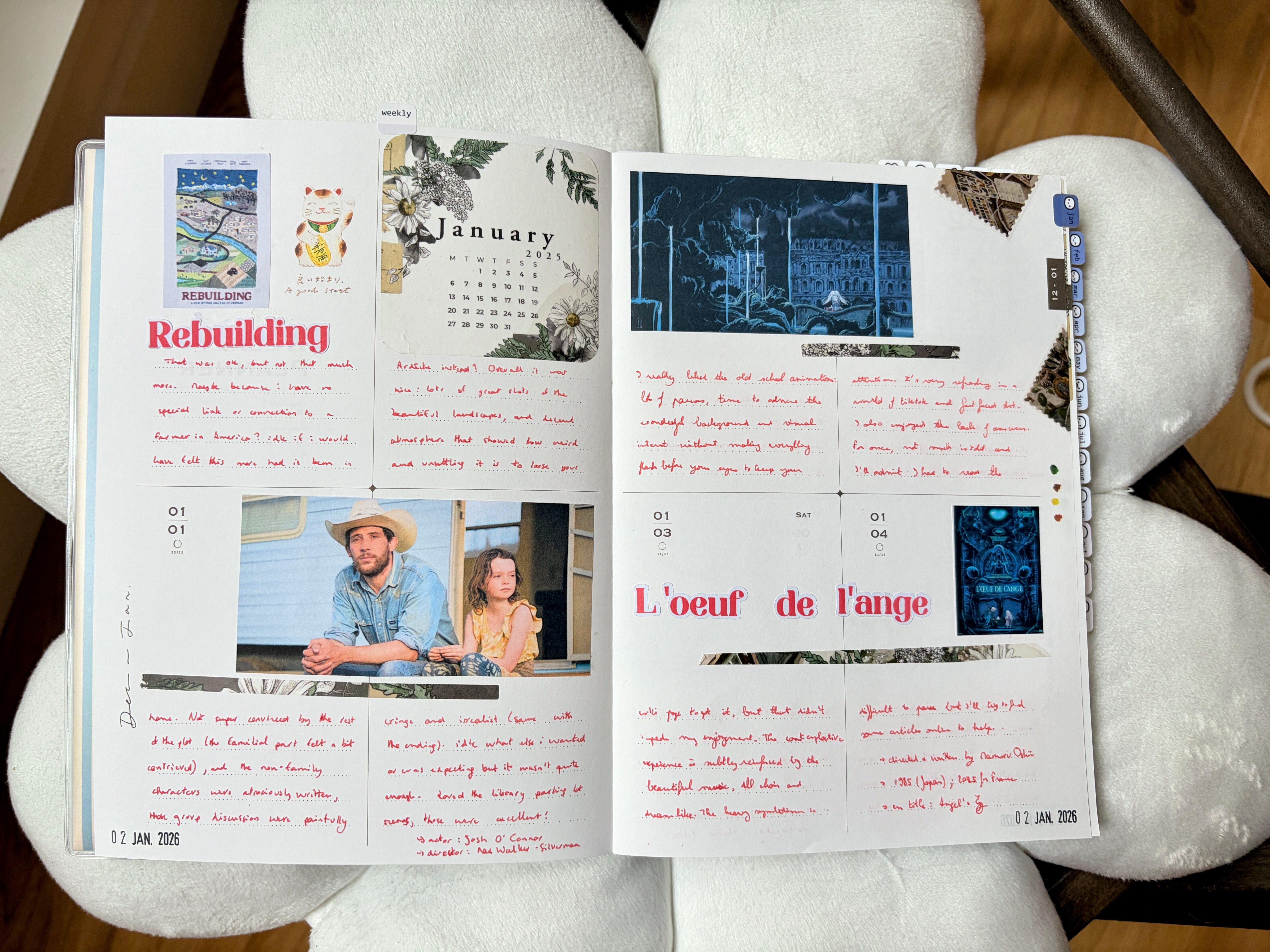
These lists and records act as a compass for my future self. I document my reactions and where i got the rec from. I’m still looking for my book-guide, but in terms of movies i’ve learned which reviewers i can trust and which ones i just don’t vibe with. That makes it a lot easier to ensure i don’t go see things i’ll hate!
The notebook method might not be the best for you, so take a minute to see what would motivate you. Maybe you write it all down for social media and likes keep you going? Or you systematically go see things with your friends and schedule a drink with them afterwards to compare your takes?

Should i aim for a 5 stars average?
So that’s half of the problem covered: i know how to track where i go and what i see, where to find stuff that i’m likely to enjoy, and i make an effort to record my thoughts on the whole thing. But what about the grading? I’m a data fiend, plotting all my ratings on a graph is the best feeling in the whole entire world! So what is the GPA i’m aiming for?
I cannot – will not – deprive myself of the wonderful joy that a rating graph gives me. But i do want to reflect on what it means for art. Of course, the perfect enjoyment graph for entertainment is 5* all across the board! I want to love my free time and see stuff that makes me laugh or cry, that escapes me to another world. I want dragons and hot men and CGIs and epic orchestra tracks – I am a basic bitch, and my tv show history reflects that.
But i think that for art – “big A” art – the picture is a bit more nuanced. Sure if i get to see beautiful paintings and listen to fabulous renditions of Wagner, then all the better! I just don’t want to fall into the trap of treating artistic projects with that same mercantile optimization of happiness. Forgive me for saying the obvious: art isn’t always meant to coddle feelings, it’s also about broadening horizons, making me discover new perspectives, new feelings, new technics, new stuff in general – and i won’t love all of it.
I’m not trying to get a normal distribution of ratings though, because that would mean seeing a fuck ton of mediocre stuff and i don’t want that for myself. I think a healthy goal is to focus on getting a good mix of 3 to 5 stars? That would mean i avoid the crap that does nothing for me, and i keep only the thought-provoking stuff (i can give 3 stars to something i didn’t like but thought had merit, like a very well crafted book but i hated the ending).
Be more than a customer
I could have also talked about “who gets to say what good art is?” but i didn’t feel like getting into all the philosophy of it (not sure i even have an opinion!), so instead i’ll tell you some nice words: I wish for you to see art you like, and maybe art you don’t hate but don’t love as much, and to discover new things in this new year <3
Personally, i’ll do my best to engage actively with the art i see, and while not a critic, i’ll try to share with you my thoughts on it. I don’t believe in hustling or sharing all your life on social media, but i’ll make an effort to get this stuff out of my head and to share it with you here. I only really wrote 3 posts about movies last year, but i’ll try to make more in 2026!


I should also try to put some thoughts on this posts’ twin sister: how on earth do you measure a year of art creation as a beginner, non-professional artist? Cause i want to improve my drawing, my painting, my dancing, and my writing, but i have little idea of how to get there! Let me know any thoughts below on the topic <3
Actually watched it since i wrote this draft and hated how every interesting thought wasn’t actually used in depth… I’ll watch season 2 but it better get good!
I know you can go anywhere in sweatpants in the usa, but that’s really not the culture in France and i feel very self-conscious and bad about myself when i do it. Joggers and co are reserved for sport activities only, not the museum or the opera.
I love your journal! It’s so cute and whimsical and colourful.
Paris is a wonderful city to be in for culture but it is true that we need to act FAST or everything gets sold out very quick.
I too track my reading and culture consumption when I can in my journal, but there’s a performance to this activity that kind of puts me off. So I’ve decided to write about the art I consume only if I feel like I’ve got things on my mind. Otherwise, it feels like I’m forcing myself.
I love your articles! I always have a very good time reading your posts and I am eager to read more! ☺️
I love this analysis of how you intentionally consume art and media! I laughed to myself when you recommended getting a well paying job…because….yeah LOL these notebooks are not cheap. I’m looking forward to all your posts about media in the year to come!